 Daniel O'Connor
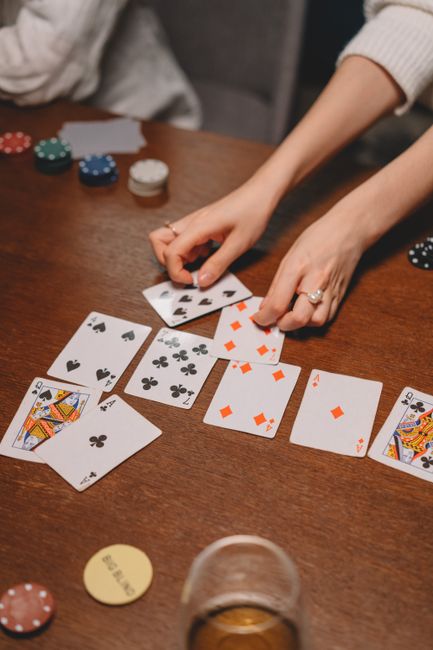
Ask ten casino players what separates a winning session from a losing one and you will get ten different answers. Some swear by bankroll discipline. Others insist it is all about reading the table. A few will quietly admit they just chase bonuses until the luck runs dry. The truth is messier than any of those answers, and understanding where luck actually ends and skill begins is the single most valuable thing you can learn as an iGaming player. It changes how you pick games, how you size your bets, and how you react when a session goes sideways.
The Spectrum Nobody Talks About
iGaming is not one thing. It is a spectrum that runs from pure chance on one end to genuine strategic depth on the other, and almost every game sits somewhere in between.
At the pure-luck end you have online slots. Each spin is an independent event. The RNG does not care about your last ten spins, your balance, or how long you have been playing. A slot with a 96% RTP will pay back 96% of all wagered money over millions of spins, but that number says nothing about your next twenty minutes. Variance is the word that matters here, and it is why two players on the same slot can have wildly different experiences.
Poker sits at the opposite end. Over a single hand, luck dominates. Over 100,000 hands, skill dominates so thoroughly that a strong player can beat a weak one regardless of short-term swings. That gap between short-term noise and long-term signal is the entire foundation of professional poker.
Blackjack, sports betting, and video poker fall somewhere in the middle. Card counting in blackjack genuinely shifts the edge, but only if the rules allow it and you can execute without being spotted. Sports betting rewards information and line-shopping, but a bad beat can still wipe out a well-researched parlay.
What Skill Actually Looks Like in Each Game
People throw the word skill around loosely, so let us get specific.
- Slots: The only real skill is game selection. Choosing a slot with a higher RTP, understanding its volatility, and knowing whether it has a bonus buy feature with a fair return. That is it. After that, you are a passenger.
- Blackjack: Basic strategy reduces the house edge to roughly 0.5% when played perfectly. Deviating on a hunch can push that number to 2% or more. Counting cards can flip the edge in your favor, but it requires hundreds of hours of practice and tolerance for heat.
- Poker: Position, pot odds, range construction, bet sizing, and reading opponents. A skilled player at a soft table prints money over time. At a table full of grinders, the same player might be break-even after rake.
- Sports betting: Line shopping, injury news, weather, and understanding closing line value. Consistent winners treat it like an investment portfolio, not a thrill ride.
Notice the pattern? The more decisions you make per hour, the more skill can compound. Slots give you almost no decisions. Poker gives you dozens.
The Bankroll Math That Most Players Ignore
Here is a concrete example that trips up almost everyone. Suppose you deposit $500 and play a slot with 96% RTP and high volatility. A common trap is assuming you will lose about $20 on average. In reality, high-volatility slots can swing 40% or more of your bankroll up or down within a few hundred spins. That $500 could be $150 or $1,200 an hour from now, and both outcomes are completely normal.
Now compare that to a skilled poker player with the same $500. Playing $1/$2 no-limit, a solid winning player might earn $10 to $15 per hour in expected value. Over 100 hours, that is $1,000 to $1,500. The variance is still brutal in the short run, but the underlying math rewards the better player over time. If this is new to you, สล็อต is a sensible next read.
The practical takeaway is simple: match your bankroll size to the variance of the game. If you want to play high-volatility slots, you need 20 to 30 buy-ins, not five. If you want to play poker seriously, you need at least 20 buy-ins for cash games and 50 or more for tournaments.
Why Bonuses and Promotions Change the Equation
Bonuses do not eliminate the house edge, but they can temporarily reduce it. A 100% match bonus with a 30x wagering requirement on slots contributes differently than the same bonus on blackjack, where wagering often counts at 10% or less.
Run the numbers before you accept anything:
- Multiply the bonus amount by the wagering requirement.
- Estimate how much you will lose in expected value while clearing it.
- Compare that loss to the bonus itself.
For example, a $100 bonus with 30x wagering on a 96% RTP slot requires $3,000 in wagers. Expected loss is 4% of $3,000, or $120. That bonus is worth less than it looks. A $100 bonus with 20x wagering on a 97% slot requires $2,000 in wagers and costs about $60 in expected value. That one is genuinely valuable.
This is where casual players and sharp players diverge. Casuals see a big number. Sharps see the fine print and do the arithmetic.
Managing Emotion Is the Real Edge
The most underrated skill in iGaming has nothing to do with cards or reels. It is emotional regulation. Tilt, chasing losses, and playing past your stop-loss are the three fastest ways to turn a small loss into a disaster.
A simple framework that works:
- Set a session stop-loss before you start. When you hit it, you are done, no exceptions.
- Set a win target too. Walking away up prevents the slow bleed back to zero.
- Take breaks every 45 minutes. Fatigue degrades judgment long before you notice it.
- Never play to recover money. Play because the decision is +EV, or do not play at all.
The Conclusion Most Articles Skip
Here is the part people do not want to hear: if you are playing slots only, you are paying for entertainment, and that is completely fine as long as you are honest about it. There is no secret strategy that beats a 96% RTP machine. The players who claim otherwise are either selling something or fooling themselves.
If you want skill to actually matter, you have to move toward games where decisions compound: poker, sports betting with disciplined line shopping, or blackjack played with perfect basic strategy. In those games, study, bankroll management, and emotional control genuinely separate winners from losers.
The smartest iGaming players do both. They enjoy slots as entertainment with money they can afford to lose, and they treat poker or betting as a craft they actively work to improve. Knowing which one you are doing at any given moment is the difference between a hobby and a leak.


